
April 26, 2026 · BrightLife Physical Therapy & Wellness
5 Hip Pain Stretches and Mobility Exercises to Try at Home
5.0 rating45 five-star Google reviews
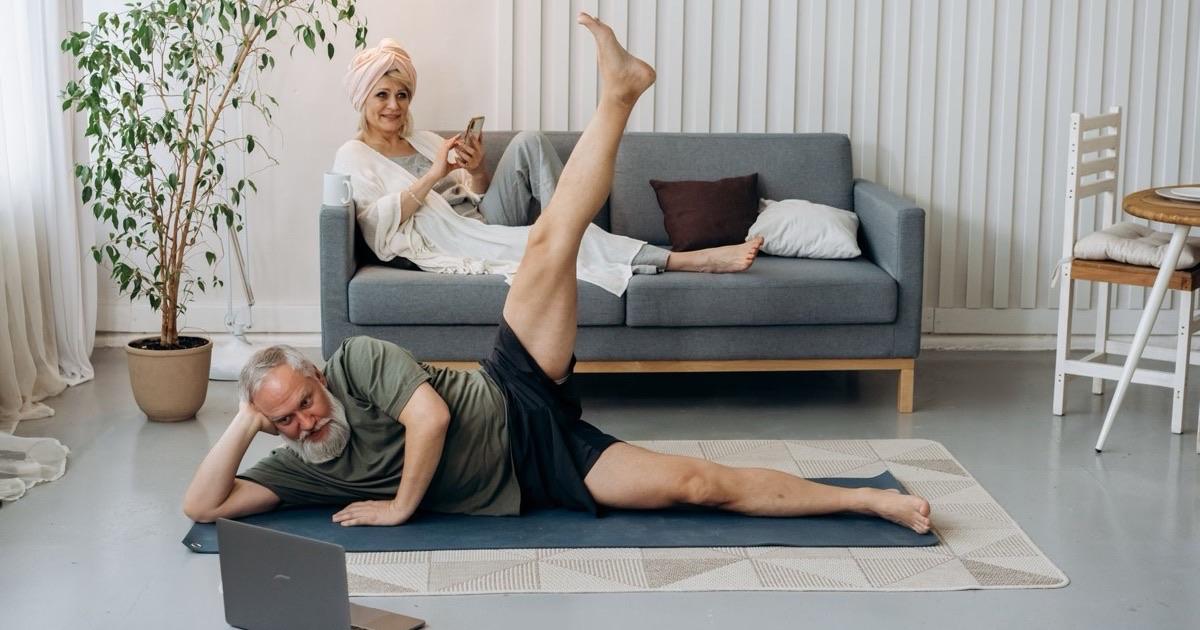
Hip pain is unusual in that the location of the pain often does not match the source. Pain on the outside of the hip frequently comes from gluteal tendinopathy or bursitis. Pain in the groin often points to the joint itself — arthritis, labral issues, or hip impingement. Pain in the back of the hip can be the hip joint, the SI joint, the piriformis muscle, or even referred low back pain. Sorting out the source is the first step in addressing it, which is why generic hip exercises do not always help.
That said, several common patterns drive a large share of chronic hip pain — and the five exercises below target those patterns. They are appropriate for most non-acute hip pain in adults. Skip them if your hip pain followed a fall, if you cannot bear weight, or if pain is severe at rest.
What Most Hip Pain Has in Common
A few patterns are at the root of much non-injury hip pain:
- Weak gluteus medius — the muscle on the outer hip that stabilizes the pelvis when you stand on one leg. Weakness here is associated with lateral hip pain, knee pain, and low back pain.
- Tight hip flexors — chronic sitting shortens these muscles, pulling the pelvis forward, increasing strain on both the hip joint and the lumbar spine.
- Weak glutes overall — leads to compensation by the hip flexors and low back, contributing to a cycle of tightness and overuse.
- Reduced hip joint mobility — common with hip arthritis or stiffness from prolonged sitting; limits how the joint can move under load.
- Movement pattern issues — poor mechanics during squatting, walking, or stair use that load the hip in unhelpful ways.
How Physical Therapy Approaches Hip Pain
Evaluation looks at where the pain is, what makes it worse, the strength of the hip muscles in different directions, joint mobility, and how you move through everyday tasks. Treatment combines targeted strengthening (usually glute work, especially the medius), mobility for tight muscles or joint capsules, hands-on manual therapy where needed, and movement-pattern retraining for squatting, lifting, climbing stairs, and walking. For hip osteoarthritis, this conservative approach often substantially delays — sometimes indefinitely — the need for surgical replacement.
5 Exercises to Try at Home
Do these once daily. Start with the recommended reps; build up gradually. Mild muscle fatigue is normal; sharp pain in the hip joint is a signal to stop and re-evaluate.
1. Glute Bridges
Lie on your back, knees bent, feet flat on the floor about hip-width apart. Squeeze your glutes and lift your hips toward the ceiling so your body forms a straight line from knees to shoulders. Hold 2 seconds at the top, lower slowly. 10-15 reps. The foundational glute activation exercise — benefits almost every type of hip pain.
2. Clamshells
Lie on your side, knees bent at about 45 degrees, feet stacked. Keeping your feet together, lift your top knee toward the ceiling without rotating your pelvis backward. Slowly lower. 10-12 reps on each side. This specifically targets the gluteus medius — the most commonly weak muscle in chronic hip pain, and the one whose weakness drives lateral hip pain, IT band issues, and many knee complaints.
3. Kneeling Hip Flexor Stretch
Kneel on one knee (cushion it if needed), other foot flat in front of you in a lunge position. Keeping your back tall, gently shift your hips forward until you feel a stretch along the front of the kneeling-side hip and upper thigh. Hold 30 seconds, switch sides. Addresses the tightness that builds up in the hip flexors from sitting all day and contributes to both hip and low back pain.
4. Figure-4 Stretch
Lie on your back, knees bent. Cross your right ankle over your left thigh, just above the knee. Reach through and grasp the back of your left thigh, gently pulling toward your chest until you feel a stretch in your right glute and outer hip. Hold 30 seconds, switch sides. Releases tightness in the deep external rotators (including the piriformis) that often contribute to glute and posterior hip pain.
5. Standing Hip Extensions
Stand behind a sturdy chair, hands lightly on the back for balance. Keeping your leg straight and back upright, slowly extend one leg straight back behind you, leading with the heel, squeezing the glute. Lower slowly. 10 reps per side. Practical glute strengthening that translates directly to better walking and stair mechanics.
When to Skip Home Exercises and Get Evaluated
Some types of hip pain need clinical evaluation before any exercise program:
- Hip pain following a fall (possible fracture)
- Inability to bear weight on the hip
- Severe groin pain, especially with fever (possible infection)
- Night pain that does not change with position
- Sudden onset of severe pain without obvious cause
- Hip pain that worsens over weeks despite home work
- Numbness, tingling, or weakness in the leg
Getting Started
If hip pain is changing how you walk, sleep, or move through your day, an evaluation is the fastest way to identify what is driving it and build a plan that addresses it. Call us at 678-292-6150. In Georgia you can begin physical therapy without a physician referral, and we verify your insurance benefits before your first visit so you know your costs up front.