
March 18, 2026 · BrightLife Physical Therapy & Wellness
5 Signs You Need Physical Therapy After Joint Replacement Surgery
5.0 rating45 five-star Google reviews
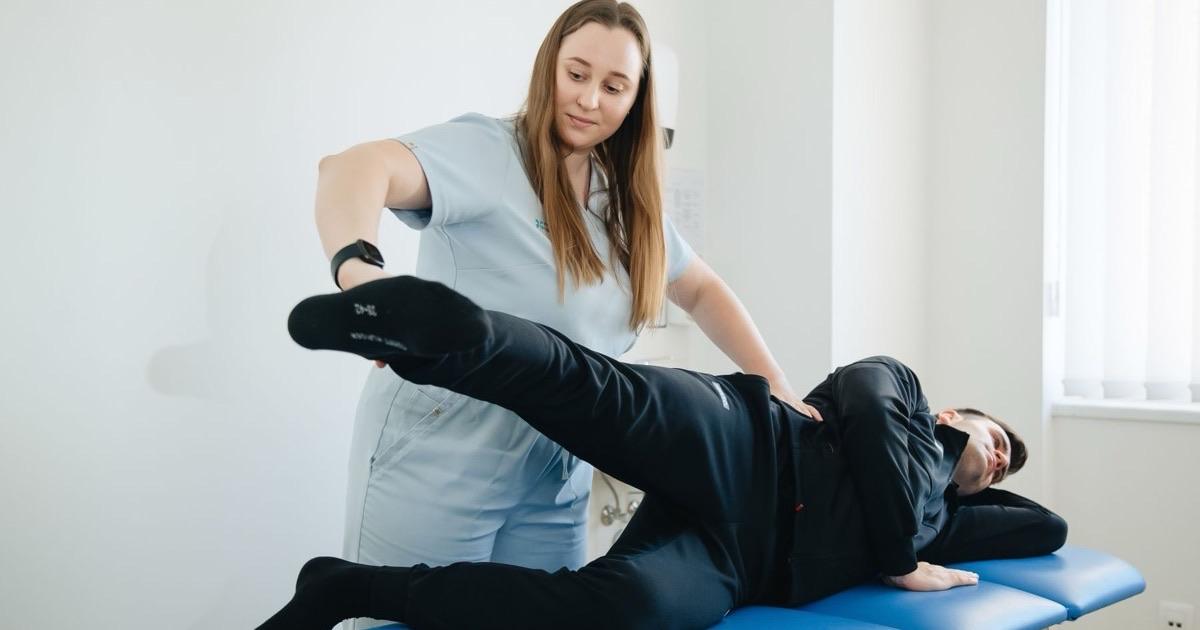
Joint replacement surgery is only the beginning of getting your mobility back. For most patients, what happens in the weeks after surgery matters just as much as the procedure itself — and physical therapy is a big part of that.
Most people receive some therapy in the hospital and during early recovery, but many stop too soon — either because they think they are doing well enough on their own, or because they are not sure when continued therapy is worth the time. If any of the five signs below apply to you, your recovery probably has more room to improve, and skilled physical therapy is the most reliable way to get there.
Sign 1 — Your Range of Motion Has Plateaued
After a knee, hip, or shoulder replacement, there is a window — usually the first few months — when motion comes back fastest. If your progress has stalled (the knee will not bend further, the arm will not lift as high, the hip feels stiff getting out of a chair), the tissue around the new joint is tightening faster than you can stretch it on your own.
Skilled therapy unlocks that next stage with targeted manual techniques and progressive mobility work. Lost range of motion is much harder to recover six months later than it is now.
Sign 2 — Pain Is Not Trending Down (or It Is Showing Up Somewhere New)
Post-operative pain should generally decrease week over week, with normal ups and downs. If yours has plateaued at a level that limits what you can do — or if you are starting to feel pain in your back, opposite knee, hip, or shoulder — that is often a sign of compensation patterns building up.
Pain that migrates is rarely random. It tends to follow how you are moving (or not moving) the surgical side. A physical therapist identifies what is causing the new pain and corrects it before it becomes its own injury.
Sign 3 — Daily Activities Feel Harder Than They Should
Stairs. Getting in and out of the car. Walking to the mailbox. Standing up from a low chair. Carrying groceries from the curb. These should all be getting easier each week, even if slowly. If they feel like they have plateaued — or are getting harder — that is typically a strength, balance, or movement-pattern issue that targeted therapy addresses directly.
You had the surgery to be able to do these things. Therapy is what closes the gap between a healed joint and a fully usable joint.
Sign 4 — You Are Favoring the Other Side
Limping. Leaning when you sit. Pushing off the armrest with the opposite arm. Letting the non-surgical leg do most of the work going upstairs.
Compensation feels normal because it is what your body does to protect a healing joint — but the longer it goes on, the more new problems it creates: opposite-side knee or hip pain, back pain, gait imbalance that does not resolve on its own. PT retrains symmetrical movement so the new joint takes its full share of the load.
Sign 5 — You Are Afraid to Trust the New Joint
Hesitating on steps. Avoiding the walks you used to take. Skipping the activities you wanted the surgery for in the first place. Worry about falling.
Confidence does not come back automatically — it comes from rebuilding strength, balance, and practice in a safe setting where someone is watching your form. That is what guided physical therapy gives you. Many of our patients say the biggest gain from a course of PT is not the inches of motion or the pounds of strength, but knowing they can trust the joint again.
What to Do If You Recognize These Signs
The first step is simple: call us. Georgia is a direct-access state, which means you do not need a physician referral to begin physical therapy. If you are uncertain whether more therapy will help, an evaluation is the fastest way to find out — we examine you, ask about your goals, and tell you honestly whether structured PT is the right next step.
Even if your surgeon already discharged you from formal therapy, or you completed some PT at a hospital or another clinic, additional therapy is often appropriate — especially if any of the five signs above describe where you are now.
How BrightLife Approaches Joint Replacement Recovery
Every recovery is different, so every plan is different. When you come in we coordinate with your surgeon's protocol, assess where your motion, strength, and confidence are right now, and build a plan calibrated to that — not a generic post-op program.
Sessions are one-on-one with your therapist. You also leave with a short home program so progress continues between visits. We explain what you are doing and why, and we re-measure your progress regularly so you can see the gains.
Getting Started
If you are recovering from a knee, hip, shoulder, or other joint replacement near Lilburn, Snellville, or the Five Forks area, the easiest first step is a phone call. Call us at 678-292-6150 — no commitment, no pressure, and no referral required to schedule an evaluation.
Here is what happens next:
- We verify your insurance benefits before your first visit, so you know your costs up front.
- We schedule your evaluation, usually within the same week.
- At your evaluation we examine you, review your surgeon's protocol if you have it, discuss your goals, and build your plan of care.
- Your treatment begins — one-on-one with your therapist, at a pace that respects healing tissue.
The work after joint replacement is what turns a successful surgery into a fully restored life. We would be glad to help you get there.