
April 20, 2026 · BrightLife Physical Therapy & Wellness
Tendonitis and Bursitis: What to Try at Home and Why Loading Beats Rest
5.0 rating45 five-star Google reviews
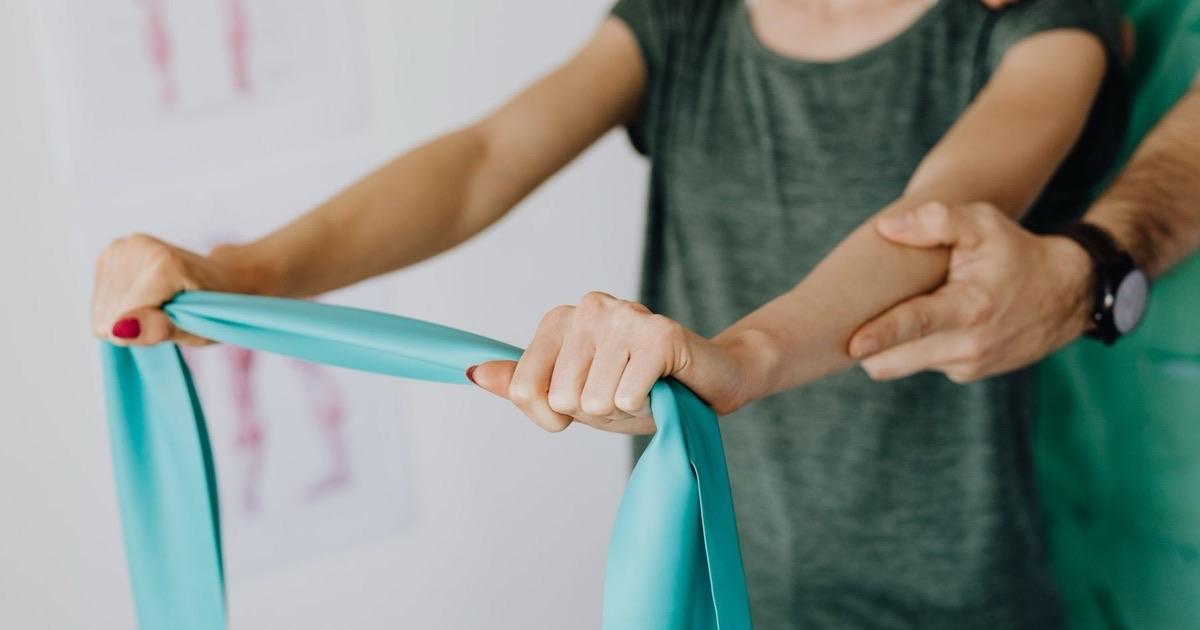
If you have ever been treated for tendonitis or bursitis, the advice probably went something like: rest, ice, take an anti-inflammatory, stretch the muscle. For many years that was the standard recommendation. The problem: it does not match what current evidence shows actually works for most chronic tendon and bursa-related pain.
Two things are true now that were not always recognized. First, what most people call tendonitis — implying inflammation — is more often tendinopathy: a degenerative change in the tendon itself, with little or no inflammation in chronic cases. Second, the most effective treatment for chronic tendinopathy is not rest but progressive loading: specific exercises that gradually increase the stress on the tendon, prompting it to remodel and strengthen. The five exercises below reflect that approach for the most common locations.
Tendonitis, Tendinopathy, and Bursitis — Brief Background
Tendons connect muscle to bone. When they are overloaded or overused over time, the tendon tissue itself can degrade — fibers become disorganized, water content increases, and the tendon becomes painful with use. In chronic cases this is more accurately called tendinopathy. Acute tendonitis (true inflammation) does happen, but it is less common in the chronic pain most people experience.
Bursae are small fluid-filled sacs that cushion tendons as they pass over bony surfaces. When they become irritated — often from overuse, direct pressure, or the mechanics of a nearby tendon problem — they can become painful and sometimes swell. Bursitis often appears alongside tendinopathy in the same area; addressing the underlying mechanics typically helps both.
Common locations we see:
- Achilles tendinopathy — pain at the back of the heel
- Patellar tendinopathy ("jumper's knee") — pain at the front of the knee, just below the kneecap
- Rotator cuff tendinopathy — shoulder pain, often worse with overhead use
- Lateral epicondylopathy ("tennis elbow") — pain on the outside of the elbow
- Gluteal tendinopathy and trochanteric bursitis — pain on the outside of the hip
Why Loading Beats Resting
Tendons respond to load. Controlled, progressive load tells the body to remodel and strengthen the tissue — the same principle that builds muscle, but with a different timeline (tendons adapt slowly). Total rest, by contrast, allows the tendon to remain weak and disorganized; when you try to return to normal activity, the pain often comes right back.
Two specific types of exercise are central to modern tendinopathy treatment:
- Isometric exercises — holding a position under load without moving. These reduce pain quickly in many tendinopathies and are a good starting point when even gentle motion is painful.
- Eccentric exercises — slowly lowering against load. These are the most evidence-based long-term treatment for chronic tendinopathies in particular.
Stretching, by contrast, has not consistently shown benefit for chronic tendinopathy and in some cases may delay improvement by adding compression to an already irritated tendon. This does not mean stretching is bad in general — it is just not the right primary tool for tendon pain.
How Physical Therapy Approaches Tendon Pain
An evaluation identifies the specific tendon involved, the severity, and the contributing factors (training load, posture, surrounding weakness, biomechanics). Treatment typically combines a progressive loading program calibrated to your current capacity, addressing surrounding mechanics that are overloading the tendon, manual therapy where appropriate, and education on activity modification — usually a temporary reduction, not total rest. For most chronic tendinopathies this approach gives the most durable outcomes.
5 Exercises to Try at Home
Each of these targets one of the most common tendinopathies. Pick the one matching your symptoms. Mild discomfort during the exercise is acceptable; sharp pain or pain that worsens over the next 24 hours is a signal to reduce the load.
1. Wall Sits (General Lower-Body Tendinopathy / Patellar Tendon)
Stand with your back against a wall, feet about a foot away from the wall, hip-width apart. Slide down until your knees are bent about 45-60 degrees (not all the way to 90 for tendon pain). Hold 30-45 seconds, rest, repeat 3-5 times. The isometric hold reduces pain and gradually loads the quad and patellar tendon. One of the most reliable first-line exercises for patellar tendinopathy.
2. Heel Raises (Achilles Tendinopathy)
Stand at the edge of a step, balls of the feet on the step, heels hanging off. Rise up onto your toes, then slowly lower your heels below the level of the step over about 3 seconds. 10-15 reps. Use the railing for balance. The slow lowering (eccentric) phase is the active ingredient — it is what tells the Achilles to remodel. This is the most evidence-based exercise for chronic Achilles tendinopathy.
3. Resisted Wrist Extension (Tennis Elbow)
Rest your forearm on a table, palm down, wrist hanging off the edge, holding a light weight (1-2 lbs to start; a soup can works). Slowly lift the back of your hand up, then lower over 3-4 seconds. 10-15 reps. The slow lowering loads the common extensor tendon at the outside of the elbow. The most studied home exercise for lateral epicondylopathy.
4. External Rotation Isometric (Rotator Cuff)
Stand next to a wall, affected side closest. Bend your elbow 90 degrees, tucked at your side, with the back of your hand or wrist against the wall. Press the back of your hand into the wall (as if you were trying to rotate your forearm outward) at about 50-70% effort. Hold 30-45 seconds. Repeat 3-5 times. Effective for reducing pain in rotator cuff tendinopathy and a good early-stage exercise before progressing to band work.
5. Side-Lying Hip Abduction (Gluteal Tendinopathy)
Lie on your unaffected side. With your top leg straight, slowly lift it 6-12 inches toward the ceiling, then lower over 3 seconds. 10-15 reps. Start with no weight; progress slowly. Loads the gluteus medius and the gluteal tendons — the structures involved in trochanteric bursitis and gluteal tendinopathy. Avoid lifting too high; rotation through the pelvis recruits the wrong muscles.
When to Get Evaluated
Some situations need a clinical evaluation before any loading program:
- Sudden pop or snap with severe pain (possible tendon rupture)
- Inability to use the limb in the affected direction at all
- Visible deformity
- A joint that is red, hot, and swollen (possible infection)
- Numbness or tingling along with the pain
- Pain that is worsening despite consistent loading over 8-12 weeks
Getting Started
Tendinopathies are slow to improve — typically 8-12 weeks of consistent loading — but they do improve with the right program. If yours has not responded to rest, anti-inflammatories, or generic stretching (which is most of them), it is worth getting a structured loading program tailored to where you are now. Call us at 678-292-6150. Georgia does not require a physician referral, and we verify your insurance benefits before your first visit.